
Key Takeaways
- Effective commercial floor care requires a dual approach: daily dry maintenance to remove abrasive particulates and scheduled wet scrubbing tailored to specific material types.
- Specialized flooring materials, such as polished concrete, commercial tile, hardwood, and carpet, each require distinct chemical formulations to protect surface integrity.
- High-traffic commercial facilities benefit from structured maintenance schedules that combine routine janitorial passes with periodic restorative interventions.
- Outsourcing facility floor maintenance ensures consistency, proper equipment deployment, and compliance with industry safety standards.
Maintaining clean, safe, and professional flooring across a business facility requires a structured approach tailored to surface materials and daily foot traffic. From expansive industrial warehouses to corporate executive suites, heavy particulate, humidity, and constant foot traffic put continuous stress on floor finishes. Facility managers seeking comprehensive sanitation solutions often turn to professional commercial cleaning in Grapevine, Texas to protect their flooring investments while keeping daily operations running smoothly.
Establishing an effective cleaning routine begins with understanding how different commercial flooring materials react to traffic, moisture, and chemical agents.
Material-Specific Floor Care Methods
Commercial facilities feature a wide range of flooring substrates, each engineered for distinct aesthetic and operational requirements. Using an incorrect cleaning compound or equipment setting can permanently damage protective coatings or degrade underlying materials.
| Flooring Type | Common Facility Usage | Primary Hazard | Recommended Cleaning Strategy |
| Polished Concrete | Warehouses, industrial facilities, retail spaces | Acidic etching & gloss dulling | Daily dry dust mop; auto-scrub with neutral pH cleaner |
| Vinyl Composition Tile (VCT) | Schools, healthcare clinics, office breakrooms | Surface scuffing & finish stripping | Daily sweep; wet mop or auto-scrub; periodic burnishing |
| Commercial Hardwood | Executive offices, conference centers | Moisture absorption & wood warping | Microfiber dust mop; dry-mopping with wood-safe formulations |
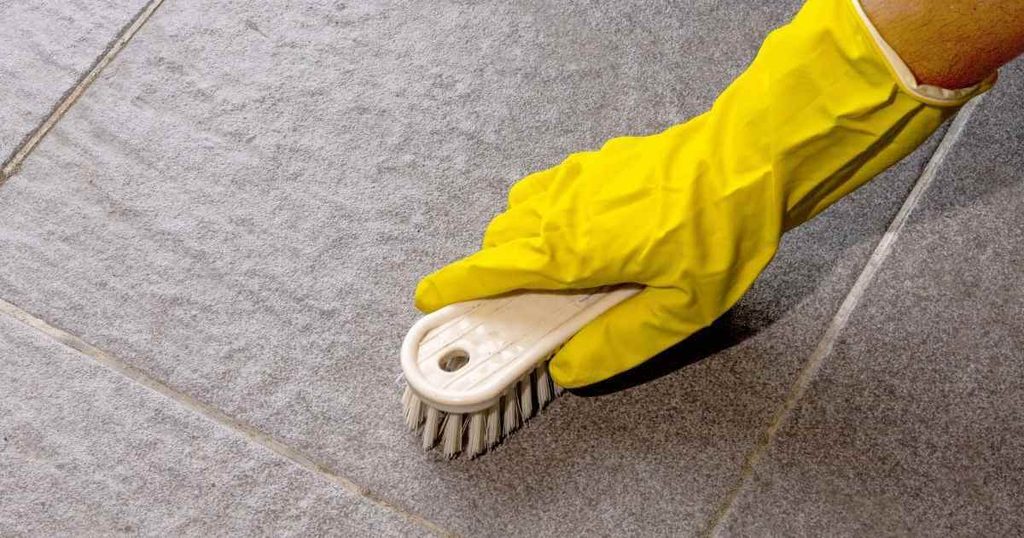
| Tile & Grout | Restrooms, lobbies, commercial kitchens | Soil trapping in porous grout lines | High-pressure extraction; neutral detergent scrub |
| Commercial Carpet | Office spaces, hotel corridors | Deep-set soil & allergen accumulation | Daily high-efficiency vacuuming; hot water extraction |
Polished and Sealed Concrete
Industrial spaces and modern commercial buildings frequently utilize polished concrete due to its exceptional durability. However, concrete remains susceptible to chemical attack from acidic substances. According to the Occupational Safety and Health Administration, proper chemical handling is essential when selecting facility cleaning products to protect both surface integrity and worker safety. Facility teams should utilize neutral pH detergents applied via automatic scrubbers equipped with non-abrasive pads.
Vinyl Composition Tile (VCT)
VCT relies on a clear coat of protective finish to shield the underlying tile from heavy foot traffic. Maintenance teams should sweep VCT daily to eliminate fine grit that acts like sandpaper under footwear. Routine damp mopping with neutral cleaners keeps the surface bright, while periodic high-speed burnishing restores protective gloss between restorative strip-and-wax procedures.
Tile, Grout, and Hardwood
Porous grout lines in commercial restrooms collect moisture, oils, and bacteria if left untreated. High-pressure tile scrubbing combined with neutral detergent solutions lifts trapped soils without breaking down sealant barriers. Conversely, commercial hardwood floors require strict moisture control; standing water must never be allowed to accumulate, and microfiber dust mops paired with low-moisture cleaning agents should be prioritized.
Safety Standard Note: Applying protective finishes or cleaning solutions requires establishing minimum slip-resistance levels. Utilizing non-slip, floor-tested chemicals reduces slip-and-fall hazards in high-traffic commercial environments.
Establishing a Facility Floor Maintenance Schedule
A proactive maintenance schedule balances daily preventative care with periodic deep restoration to maximize the lifespan of commercial flooring.
Commercial Floor Maintenance Routine:
- Daily Operations: High-efficiency dust mopping, entrance mat vacuuming, and immediate spot cleaning of liquid spills.
- Weekly Tasks: Auto-scrubbing high-traffic corridors, damp mopping secondary walkways, and detail-cleaning along baseboards.
- Monthly Adjustments: High-speed burnishing for VCT finishes, deep grout scrubbing in high-moisture areas, and deep carpet spot treatments.
- Quarterly or Semi-Annual Restorations: Full strip-and-wax procedures for vinyl tile, deep hot-water extraction for commercial carpets, and deep sealing for polished concrete.
Implementing structured passes ensures high-traffic zones receive necessary attention without over-processing lower-density areas.
Best Practices for Chemical and Equipment Management
Deploying proper equipment and chemical diluters prevents cross-contamination and preserves surface finishes across various building zones.
- Utilize Auto-Scrubbers for Large Footprints: Automatic floor scrubbers apply clean solution, scrub the substrate, and vacuum dirty water in a single pass, drastically reducing labor time in large facilities.
- Implement Color-Coded Microfiber: Assign specific microfiber mop colors to distinct building areas—such as red for restrooms and blue for office suites—to prevent cross-contamination.
- Control Chemical Dilution Rates: Over-concentrated cleaning solutions leave sticky chemical residues that actually attract and trap incoming dirt faster.
- Maintain Entrance Matting Systems: Position at least 10 to 15 feet of commercial matting at all exterior entry points to capture up to 80% of incoming dirt, sand, and moisture before it reaches interior floors.
Adhering to these industry standards protects your property assets and ensures a healthy indoor environment for employees and visitors.
Streamlining Your Facility Operations
Managing commercial floor care across a large facility demands specialized equipment, precise chemical knowledge, and consistent labor execution. Partnering with experienced commercial maintenance professionals allows business leaders and facility managers to focus on core operations while ensuring their property remains presentable, safe, and compliant.
At GT Corporate Cleaning, we bring a global standard of operational excellence to Texas businesses across the Dallas–Fort Worth metroplex. Our fully trained, insured professionals deliver custom maintenance plans tailored specifically to your building type. Whether your property requires full-scope commercial cleaning services to maintain daily standards, dedicated janitorial services for ongoing facility support, or tailored office cleaning services for professional administrative environments, our team has the expertise to execute. They also handle commercial power washing for facilities that need exterior surface maintenance. To discuss your facility’s maintenance requirements and request a tailored quote, connect with our team or call our Dallas office at (214) 471-4355 or our Fort Worth office at (817) 437-0380.
