There is no single cleaning schedule that fits every commercial facility. A small professional office with ten employees may need service a few times a week. Busier environments can require daily cleaning, or even multiple touchpoints during the day. That includes medical offices, retail stores, warehouses, schools, fitness centers, and other customer-facing businesses.
The right frequency comes from how the building is used.
When planning commercial cleaning in Grapevine, we would look at employee count, customer traffic, restroom use, breakrooms, floor type, operating hours, industry expectations, and how quickly the building starts looking or feeling dirty after service.
At G&T Corporate Cleaning Services, we have spent 25 years cleaning commercial spaces across Dallas-Fort Worth. The most common mistake we see is choosing a frequency based only on square footage. A 5,000-square-foot office with 15 employees can be easier to maintain than a 2,500-square-foot customer-facing facility with constant foot traffic.
Start With People, Not Square Feet
People create the cleaning load. Every employee or visitor uses doors, restrooms, flooring, trash cans, desks, counters, breakrooms, and shared touchpoints. The more people move through the space, the faster those areas need attention.
That is why occupancy and traffic usually tell us more than the total size of the building. A lightly used executive office may stay presentable for several days. A smaller office with a packed waiting room can look tired by lunchtime.
If you are deciding how often to schedule recurring janitorial services, start by asking where people spend time and which spaces become visibly dirty first.
Restrooms Often Set the Minimum Frequency
Restrooms are one of the best indicators of whether your cleaning schedule is adequate. How often they need service depends on traffic:
- Low-traffic office: one professional cleaning every few days may be enough.
- Busy workplace: once a day may be the minimum.
- Public-facing facility: restrooms may need checks during operating hours, which is where day porter service can help.
This is not just about appearance. Supplies run out, trash fills up, floors get wet, fixtures show use, and odors can develop. If the restrooms keep slipping between cleanings, the building probably needs more frequent service. That holds even if the rest of the facility still looks acceptable.
Breakrooms Create Their Own Cleaning Cycle
Breakrooms and employee kitchens are more demanding than they look. A space can look fine at 8:00 a.m. and be a completely different room after lunch:
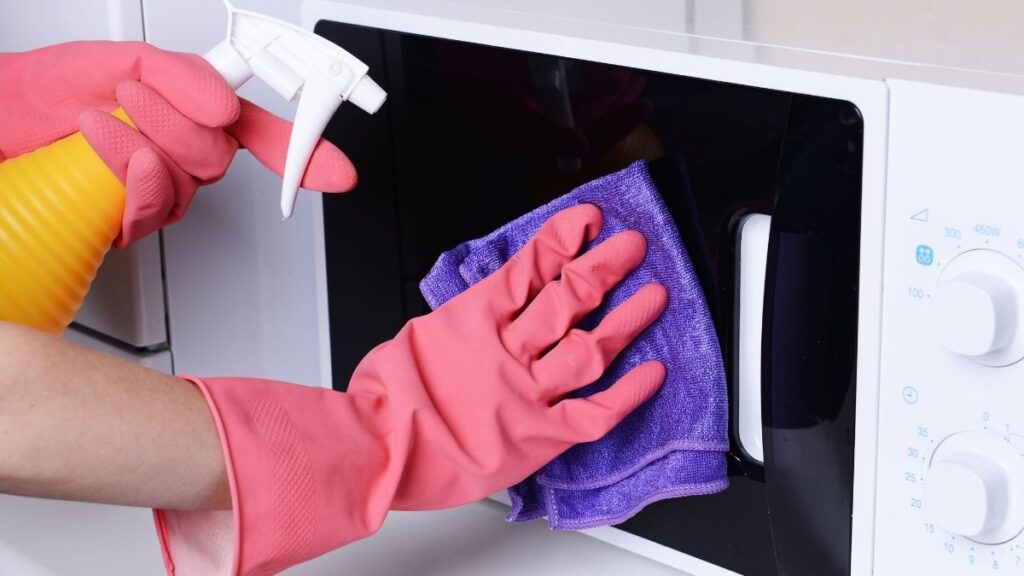
- Microwaves get splattered.
- Counters collect crumbs.
- Sink areas stay wet.
- Trash cans fill up.
- Refrigerator handles and cabinet pulls see constant contact.
That is why a commercial cleaning plan should not treat every room equally. An office may need general cleaning three nights a week but require more frequent trash, restroom, and breakroom attention. The schedule should follow how the building actually functions.
Flooring Changes the Equation
Commercial floors take a beating. Entryways capture dust, grit, rainwater, mud, and whatever comes off people’s shoes. Carpet shows traffic lanes and spots, while hard floors show debris, scuffs, and dulling. Larger facilities often have several flooring types with very different maintenance needs.
DFW conditions add to that load. Dry weather brings dust, storms bring moisture and tracked-in debris, and nearby construction can increase fine dust.
But weather is only part of it. A front entrance serving hundreds of people needs more attention than a back hallway used by five employees, even in the same building. High-visibility floors often drive the cleaning frequency because they shape the first impression of the entire facility.
Daily, Several Times a Week, or Weekly?
Here is how we think about the broad categories.
Daily service usually makes sense for higher-traffic offices, public-facing buildings, medical or wellness spaces, larger facilities, businesses with heavily used restrooms, and workplaces where cleanliness is part of the customer experience.
Several-times-a-week service can work well for small to mid-sized offices with moderate traffic. These buildings are too active for weekly service but do not need a full reset every night.
Weekly service is usually limited to smaller, lower-traffic facilities or spaces where employees handle some daily upkeep themselves.
The word “usually” matters. A 12-person office can still need daily cleaning if the facility type or customer expectations demand it.
What Happens When Cleaning Frequency Is Too Low?
The first sign is rarely a major mess. It is accumulation:
- Trash is fuller by the end of the day.
- Fingerprints stay on the glass longer.
- Restrooms feel less fresh.
- Dust starts showing on horizontal surfaces.
- Breakroom spills have time to dry and harden.
Then each cleaning visit becomes less efficient because the crew is constantly catching up. A well-matched schedule keeps routine dirt routine. An under-serviced building turns routine dirt into buildup.
What If You Are Currently Over-Cleaning?
That happens too. Some businesses inherit a schedule because “we have always cleaned five nights a week,” without asking whether five nights are still necessary.
The scope may need to change if:
- staffing has changed
- hybrid work has reduced occupancy
- part of the facility is no longer used daily
Commercial cleaning should respond to the actual building. The goal is not to maximize visits. It is to keep the facility consistently at the standard the business needs. Sometimes that means adjusting frequency by zone instead of treating every square foot the same.
Different Areas Can Have Different Frequencies
This is one of the most practical ways to build a cleaning scope. For example:
- Restrooms may need daily service.
- Private offices may only need a few visits a week.
- Conference rooms can be cleaned based on how often they are used.
- Entryways and lobbies may need frequent attention because they shape first impressions.
- Breakrooms may need daily cleaning even when other office areas do not.
A good janitorial plan accounts for those differences. That is often more efficient than under-cleaning the high-use spaces or over-cleaning the low-use ones.
How Facility Managers Can Estimate the Right Starting Schedule
Walk the building near the end of the day, not first thing in the morning, and note which areas look noticeably used. Check:
- the restrooms and trash levels
- the main entry and the glass
- the breakroom after lunch
- the floor along the highest-traffic path
Then ask how long it has been since the last professional cleaning. If the building still looks good after two days, daily service may be more than you need. If it looks tired before the end of one workday, two or three visits a week probably will not be enough.
Your own facility will give you the answer.
Frequently Asked Questions
How often should a typical office be cleaned?
Many offices need professional cleaning several times per week. The right schedule depends on traffic, restrooms, employee count, customer use, and the cleanliness standard the business expects.
Does a larger office always need more frequent cleaning?
No. Occupancy and use matter more than square footage alone.
Can different parts of the building be cleaned on different schedules?
Yes. That can be an efficient way to keep high-use areas clean without overservicing low-use areas.
How do I know if my current cleaning schedule is too light?
If restrooms, trash, floors, glass, or breakrooms consistently look dirty before the next visit, the frequency probably needs adjustment.
Can G&T Corporate Cleaning Services help build the schedule?
Yes. You can contact us to discuss the facility, operating hours, traffic, problem areas, and the standard you need to maintain.
Cleaning Frequency Should Match the Facility
Commercial cleaning is not a calendar exercise. It is an operations decision.
When the schedule matches the way people actually use the building, restrooms stay under control, floors are easier to maintain, and trash does not pile up. Each visit can also focus on maintenance instead of recovery. That is what G&T Corporate Cleaning Services aims for with every facility we clean in Grapevine and across DFW: a building that looks consistently cared for, not freshly rescued.